Create a Wallet
Understand the role of a seed phrase and choose a trusted device before creating your first wallet.
Learn →imtoken
Use one place to understand multi-chain assets, network selection, sending and receiving, DApp connections, approvals and wallet safety. imtoken focuses on reviewable actions: know which network you are using, what you are signing, and how to verify the result on-chain.
Common tasks
Understand the role of a seed phrase and choose a trusted device before creating your first wallet.
Learn →Keep recovery information offline, complete and private. Never send it to support or a website.
Learn →Check the domain, network and each request separately; connection is not the same as approval.
Learn →Wallet capabilities
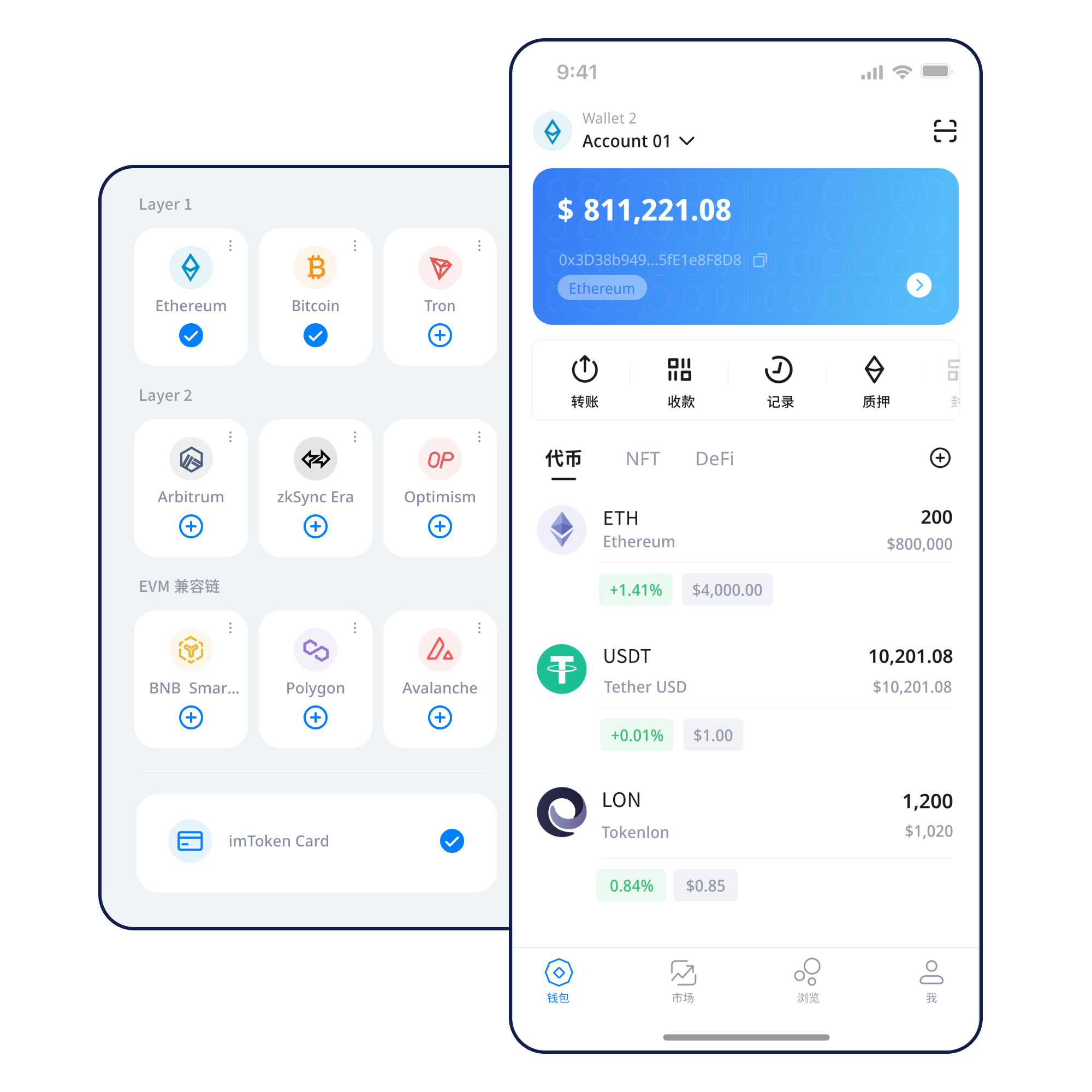
Each capability has a different security boundary. The interface can organize information, but the user still needs to verify network context, addresses, approvals and on-chain results.
Keep network identity visible while reviewing balances, contracts and confirmations.
Review address, network, amount, gas and transaction hash as one flow.
Transfer guide →Mobile network management, assets and transaction history.
Browser connections, approval review and DApp access without treating every request as trusted.
Learn more →
Keep recovery information offline and review permissions before signing.
Blockchain Networks
Wallet journey
Use the official download entry and review the device environment before installation.
Create a new wallet or import one only in a trusted environment.
Keep the seed phrase offline and never disclose a private key.
Check the recipient, selected network and gas asset before an on-chain action.
Verify the address and amount; use a small test when learning a new route.
Save the transaction hash and periodically review unused DApp approvals.
Web3 & DApp
Connecting a wallet does not mean every later signature should be accepted. Review the domain, account request, signature or approval, then disconnect sessions you no longer need.
Web3 Guide →Security
Wallet security is not a single feature. It combines offline recovery backup, careful device use, domain checks, transaction review and permission management. Seed phrases and private keys remain under the user’s control; legitimate support should not ask for them. On-chain transactions are normally not something a wallet can unilaterally reverse, and third-party DApps or smart contracts can introduce independent risks.
Security CenterFeatured guide
Start with addresses, seed phrases, private keys, networks, gas, transaction hashes, DApps and approvals. These concepts explain what a wallet can show, what only the blockchain can confirm, and which actions require the most careful review.
Read the guide →Ethereum & PoS
Understand PoS, validators, reward sources, network status, exits and withdrawals without treating staking as a fixed-return product.
Learn staking basics →Updates
Review wallet, network and transaction concepts through a clearer knowledge structure.
Network fees and confirmation times can change with current conditions.
Fake support should never receive your seed phrase, private key or verification code.
Download actions stay behind one user-initiated entry point.
FAQ
Digital assets are recorded on the relevant blockchain. A wallet manages keys used to view accounts and sign requests, then presents network data in a usable interface.
A private key generally controls a specific account, while a seed phrase can recover a set of deterministically derived accounts. Both are highly sensitive.
No. A seed phrase, private key or verification code should never be sent as routine support information or entered into an unfamiliar web page.
Assets with the same name can exist on different networks, and address formats can look similar. A network mismatch can prevent the recipient from seeing funds where expected.
Gas is the fee mechanism used to pay for network processing or smart-contract execution. Fees vary by network conditions and transaction complexity.
A transaction hash identifies a specific on-chain operation and can be used to check status, block inclusion, addresses and other public details.
imtoken
Use the download page as the single entry point; content pages do not start downloads automatically.